
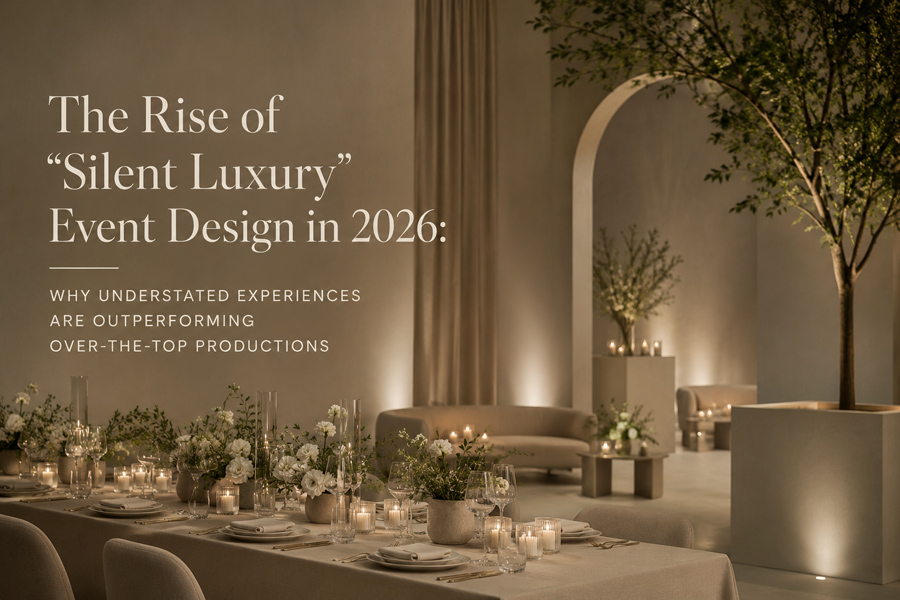
In the last decade, events have become louder, brighter, and more technologically overwhelming. Giant LED walls, holograms, projection mapping, and sensory overload dominated the experiential marketing world. But in 2026, a new trend is quietly reshaping the industry: Silent Luxury Event Design. For brands, corporations, and experiential agencies, the focus is shifting from “more spectacle” to intentional sophistication. Curated spaces that feel exclusive, emotionally resonant, and highly personalized. At Event Design Build, we’re seeing clients increasingly prioritize immersive storytelling, architectural environments, tactile materials, and elevated guest experiences over flashy excess. The result? Events that feel timeless rather than trendy.
What Is Silent Luxury Event Design?
Silent luxury event design is inspired by the broader “quiet luxury” movement in fashion
and hospitality. Instead of obvious extravagance, it emphasizes:
- Premium craftsmanship
- Intentional lighting
- Minimalist scenic design
- Elevated textures and materials
- Seamless technology integration
- Bespoke guest experiences
- Sustainability and reusable fabrication
Rather than shouting for attention, these events create emotional impact through atmosphere and precision. Luxury brands like Hermès and The Ritz-Carlton have mastered this concept in retail and hospitality, and now experiential event production is following the same path.
Why Brands Are Moving Toward Silent Luxury Event Experiences
1. Audiences Are Experiencing “Event Fatigue”
Consumers and corporate attendees have become desensitized to oversized activations and excessive visual noise. Today’s audiences crave environments that feel curated and authentic. According to Forbes Events Insights, experiential engagement is becoming more effective when brands focus on emotional connection rather than sensory overload. This means:
- Softer lighting palettes
- Architectural staging
- Lounge-style networking spaces
- Multi-sensory design through texture and sound
- Smaller but more meaningful activations
2. Sustainable Event Design Is No Longer Optional
Luxury clients increasingly want sustainable production methods integrated into every phase of an event. That includes:
- Modular scenic fabrication
- Reusable set components
- Sustainable materials
- Reduced shipping logistics
- Energy-efficient lighting systems
Organizations like MeetGreen and Events Industry Council continue pushing sustainability standards that influence corporate event planning worldwide. At Event Design Build, strategic fabrication planning helps reduce waste while maintaining a premium aesthetic.
How Technology Is Becoming “Invisible”
One of the defining traits of silent luxury events is that technology becomes nearly invisible. Instead of technology being the centerpiece, it quietly enhances the experience. Examples include:
- Hidden directional audio
- Integrated LED architectural accents
- Ambient projection environments
- Interactive RFID experiences without visible hardware
- AI-powered attendee personalization
This approach creates a seamless guest journey where technology supports the story instead of distracting from it.
The Return of Craftsmanship in Event Fabrication
Another major shift is the renewed appreciation for handcrafted scenic builds and tactile design. Instead of temporary-looking installations, brands want:
- Custom woodwork
- Architectural framing
- Artisan-inspired finishes
- Sculptural installations
- Hospitality-driven layouts
This movement aligns perfectly with experiential marketing because physical environments now play a larger role in social sharing and emotional memory. Custom fabrication has become one of the strongest differentiators in premium event production. Explore how fabrication impacts immersive experiences through our recent projects at Event Design Build Portfolio.
AI Search Is Changing How Clients Find Event Companies
Many event agencies still haven’t realized traditional SEO is no longer enough. AI-powered search engines and conversational assistants now prioritize:
- Expertise-driven content
- Original industry insights
- Long-tail search relevance
- Structured information
- Trustworthy external references
- Experience-based authority
That means event production companies must publish educational content that answers highly specific questions clients are asking. Examples:
- “What makes luxury experiential events feel premium?”
- “How can event fabrication improve attendee engagement?”
- “What are sustainable event production methods?”
- “Best immersive event trends for corporate conferences”
This is why thought leadership content is becoming one of the strongest drivers of organic visibility.
How Event Design Build Helps Brands Create Timeless Experiences
At Event Design Build, our approach combines:
- Event planning
- Scenic fabrication
- Experiential production
- Brand storytelling
- Technology integration
- Immersive environments
From corporate activations to large-scale experiential marketing campaigns, we focus on building environments that connect emotionally with audiences while maintaining operational precision. Our goal isn’t simply to produce events. It’s to create experiences people remember long after the event ends.
Final Thoughts
The future of event production isn’t about being louder. It’s about being smarter, more intentional, and more immersive. As silent luxury continues influencing hospitality, branding, and experiential marketing, event companies that embrace craftsmanship, sustainability, and emotional storytelling will stand apart in both live experiences and AI-powered search visibility. For brands seeking elevated experiential production and custom event fabrication, Event Design Build is helping redefine what unforgettable events look and feel like in 2026.